Low E Glass Upgrade in Dunedin – Low Emissivity & Argon Filled Sealed Units
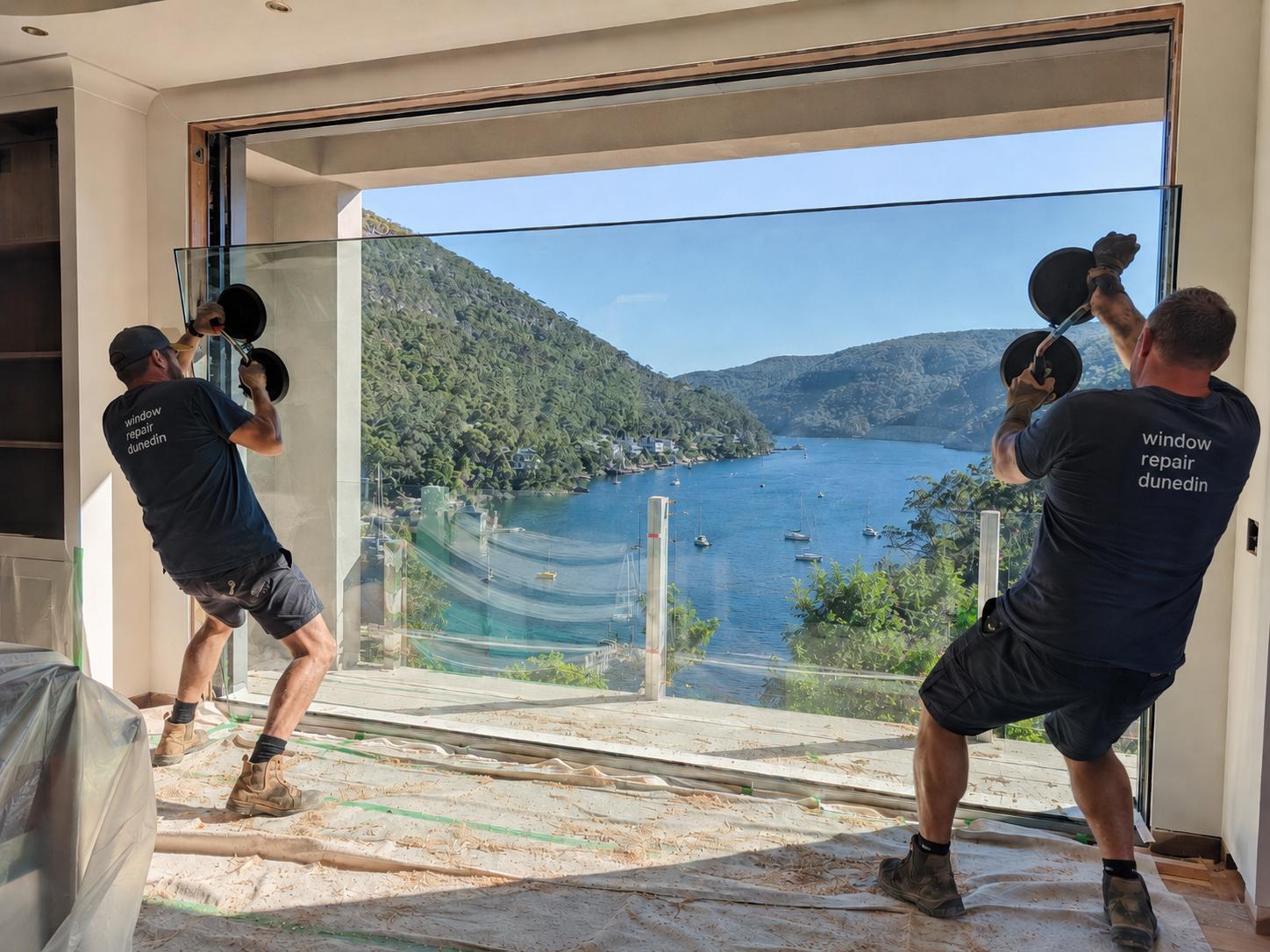
Window and Glass Repair Dunedin supplies and fits Low E double glazed units across the city. A Low E coating is a microscopically thin metallic layer on an internal glass face that reflects heat back into the room instead of letting it radiate out. You cannot see it and it does not change the view.
- Invisible metallic coating that reflects heat back inside
- Best value when a unit is being replaced anyway
- Argon fill improves it further for a modest extra
Get your free quote
Four quick questions. Most quotes come back the same day.
Nowhere in the country pays back faster than here. Low E adds roughly a third to the glass price, and in a climate zone 5 winter that is a small premium for a real cut in heat loss. It is also part of what the building code now demands on consented work, where R0.50 needs Low E glass in an insulated frame.
What Low E does in a Dunedin winter
Most of the heat leaving a window at night leaves as radiation through the glass. A Low E coating reflects a large share of that back into the room. Independent guides put the reduction in heat loss from adding Low E at around 30 percent for a modest cost per square metre.
Combined with argon fill, which replaces the air in the cavity with a heavier gas that conducts less, the unit performs better again.
Where the coating goes and why it matters
The coating sits on one of the two internal faces, protected inside the sealed cavity. In a heating dominated climate like Dunedin it goes on the room side pane so it reflects internal heat back in. Get that wrong and you have paid for a coating working against you.
It is one of the reasons units should be specified by someone who knows the orientation and use of the room rather than ordered as a line item.
Combining it with other glass upgrades
Low E can be combined with laminated glass for noise, with toughened glass for safety positions, and with obscure patterns for bathrooms. On a north facing room that overheats in summer there are solar control variants that cut heat gain as well.
Specifying Low E correctly
Which face the coating goes on
A sealed unit has four glass faces. The Low E coating sits on one of the two inside the cavity where it is protected. In a heating dominated climate it goes on the room side pane so it reflects internal heat back in.
Put it on the outer pane instead and you have paid for a coating that works against you for most of the year. It is one of the reasons units should be specified by somebody who knows the room, not ordered as a line item.
Solar control is a different product
Standard Low E is designed to keep heat in. Solar control Low E is designed to keep heat out, and the two are not interchangeable.
On a north facing room that overheats in summer the solar control variant is the one to ask for. In every other room in Dunedin, the standard one.
How Window and Glass Repair Dunedin delivers low e glass upgrade in Dunedin
Dunedin is the hardest thermal environment in the country for windows, and it is the one place where the wrong specification is genuinely expensive over time.
Assess the room, not just the window
How the room is heated, ventilated and used decides as much about the outcome as the glass does. Upgrading glazing in an unventilated bedroom moves the condensation to the frame edges rather than removing it.
Establish the requirement that applies
Dunedin is H1 climate zone 5, the highest window performance requirement in New Zealand. Window and Glass Repair Dunedin confirms whether your work is consented and therefore has to meet it, or a like for like replacement that does not, because the two lead to very different products.
Measure and record what exists
Opening sizes, room floor areas, existing glass type and frame construction. On compliance work that record is the evidence behind the statement you make to a tenant or to council.
Specify the unit deliberately
Glass thickness, cavity width, low emissivity coating, argon fill and spacer type all get chosen for the orientation and the exposure rather than sold as a package. Window and Glass Repair Dunedin explains what each component does.
Be honest about the frame
Retrofitting a sealed unit into a standard aluminium frame improves the glass and leaves the frame conducting. In a city with fifty frost days a year that frame will still sweat, and Window and Glass Repair Dunedin says so before quoting rather than after.
Manufacture and install
Units are made to the measured openings, so there is a lead time and nothing is adjusted on the day. Installation includes new tape, new beads and clearing the rebate drainage.
Verify, document and hand over
Every sash checked to operate and to fix open, then a written record of what was installed where. On a rental that document is what supports compliance if it is ever questioned.
What low e glass upgrade is worth in a Dunedin home
The case here is stronger than anywhere else in the country and the numbers are worth knowing.
The highest requirement zone in New Zealand
Climate zone 5 carries the country's highest window performance requirement because heat loss here is greater. A specification that satisfies a warmer city does not satisfy this one, which is why comparing a Dunedin quote to a friend's Auckland quote is misleading.
Retrofit is usually the best value route
Around $450 to $800 per square metre of glass, or roughly $550 to $850 per aluminium window and $800 to $1,250 for timber. A whole house commonly lands between $10,000 and $24,000, and the existing frames and finish stay.
Do the rooms you use, first
Bedrooms and living areas on the cold elevation return most of the benefit. Small hallway and toilet windows return the least and are worth doing last, or not at all.
Cold housing is under real scrutiny here
MBIE inspected fifty three Dunedin student rentals across May and June 2026. Whatever your view of the rules, the direction is clear, and upgrading ahead of enforcement is cheaper than upgrading during it.
What low e glass upgrade costs in Dunedin
Thermal work here has a stronger case than anywhere else in New Zealand, and the numbers are worth seeing before the sales pitch.
Retrofit double glazing
Roughly $450 to $800 per square metre of glass, or about $550 to $850 per aluminium window and $800 to $1,250 for timber. A whole house commonly lands between $10,000 and $24,000 with the existing frames and internal finishes untouched.
Sealed unit upgrades
A low emissivity coating, an argon fill and a warm edge spacer add very little to a unit being made anyway. In climate zone 5 they are close to free performance, and retrofitting them later means paying for the unit twice.
New thermally broken joinery
Meaningfully more per window than standard aluminium and it is the only route that removes the cold bridge through the frame entirely. On consented work in this zone it is effectively the requirement rather than an upgrade.
Compliance work on a rental
Most Healthy Homes ventilation failures are hardware rather than glazing. Freeing painted shut sashes, replacing seized stays and fitting working catches usually brings a house into compliance for a fraction of what owners expect.
Where to spend it in a Dunedin home
The same budget produces very different outcomes depending on where it goes.
Bedrooms and living rooms on the cold elevation
These return most of the comfort benefit and most of the condensation reduction. Small hallway and toilet windows return the least and are worth doing last or not at all.
Extraction before glazing, every time
A vented range hood and a ducted bathroom extractor remove moisture where it is produced. This is the cheapest intervention available and it is frequently the only one needed. Upgrading glazing in an unventilated house moves the condensation rather than removing it.
The frame is the limit on a retrofit
Retrofitting a sealed unit into a standard aluminium frame improves the glass and leaves the frame conducting. With fifty frost days a year that frame will still sweat at the edges, and anyone who does not tell you this before quoting is selling rather than advising.
Stage it by room, not by elevation
Doing the rooms people actually use gets you most of the benefit for part of the spend. Doing it by elevation looks tidier from the street and delivers less.
How low emissivity glass works in a Dunedin home
It is a microscopically thin metallic coating on one face inside a sealed unit and it does one job very well.
It reflects heat back where it came from
The coating is transparent to visible light and reflective to long wave heat. In winter it keeps radiant heat inside the room. In summer it reduces solar gain coming in.
Coating position matters
Which surface inside the unit carries the coating changes whether it favours keeping heat in or keeping heat out. It is specified rather than assumed, based on the orientation of the window.
It is not tint and it is not privacy glass
A good low E coating is close to invisible. People expecting a visible difference are usually thinking of solar control tint, which is a different product.
Combining low E with argon and spacers in Dunedin
The unit as a whole is what performs, not any single component.
Argon fill in the cavity
Argon conducts less heat than air, so the same unit performs better with no visible change. It adds very little to the price of a unit being made to order.
Warm edge spacer bars
The metal spacer around the edge of a unit is a cold bridge. A warm edge spacer reduces condensation at the perimeter of the glass, which is where it usually appears first.
When it is worth specifying
Any time a sealed unit is being made anyway, whether that is a retrofit, a fogged unit replacement or new joinery. Retrofitting it later means buying the unit twice.
Low E Glass Upgrade at a glance
- What it is
- Thin metallic coating on an internal face of the sealed unit
- Effect
- Around 30 percent less heat loss for a modest cost per square metre
- Argon
- Cavity gas fill, improves performance further
- Position
- Room side pane in a heating dominated climate like Dunedin
- Combines with
- Laminated acoustic, toughened safety, obscure patterns
- Best time to buy
- When a unit is being replaced for another reason
Low E Glass Upgrade in Dunedin: common questions
Can you see a Low E coating?
Not in normal use. It is microscopically thin and sits inside the sealed unit.
Is it worth adding when I replace a fogged unit?
Usually yes. You are paying for the unit and the labour anyway, so the coating is only the difference in glass price.
Does Low E stop my room getting sun?
Standard Low E is designed to keep heat in instead of block sun. If summer overheating is the issue, a solar control variant is the one to ask for.
Recent Dunedin jobs
Got three quotes for retrofitting the front of the house. Only ones who measured every opening and explained why the south facing rooms needed different glass. Fourteen windows over three days and the difference in the mornings is obvious.
Landlord here. Had four flats assessed before the inspections. Two just needed sashes freed up and stays replaced rather than new joinery, which saved me a fortune. Straight answers and a written report I could hand over.
Slider had been jamming for years and we assumed it needed replacing. Turned out to be rollers and a bent track. Two hours, a fraction of the price we were braced for.
Fogged unit in the lounge, measured on the Tuesday and in by the following Monday. Fair price and they cleaned up after themselves.
Get a price for low e glass upgrade in Dunedin
Free measure, fixed written quote, and a straight answer on whether it needs repairing or replacing.
Start your quote
Four questions and you are done.